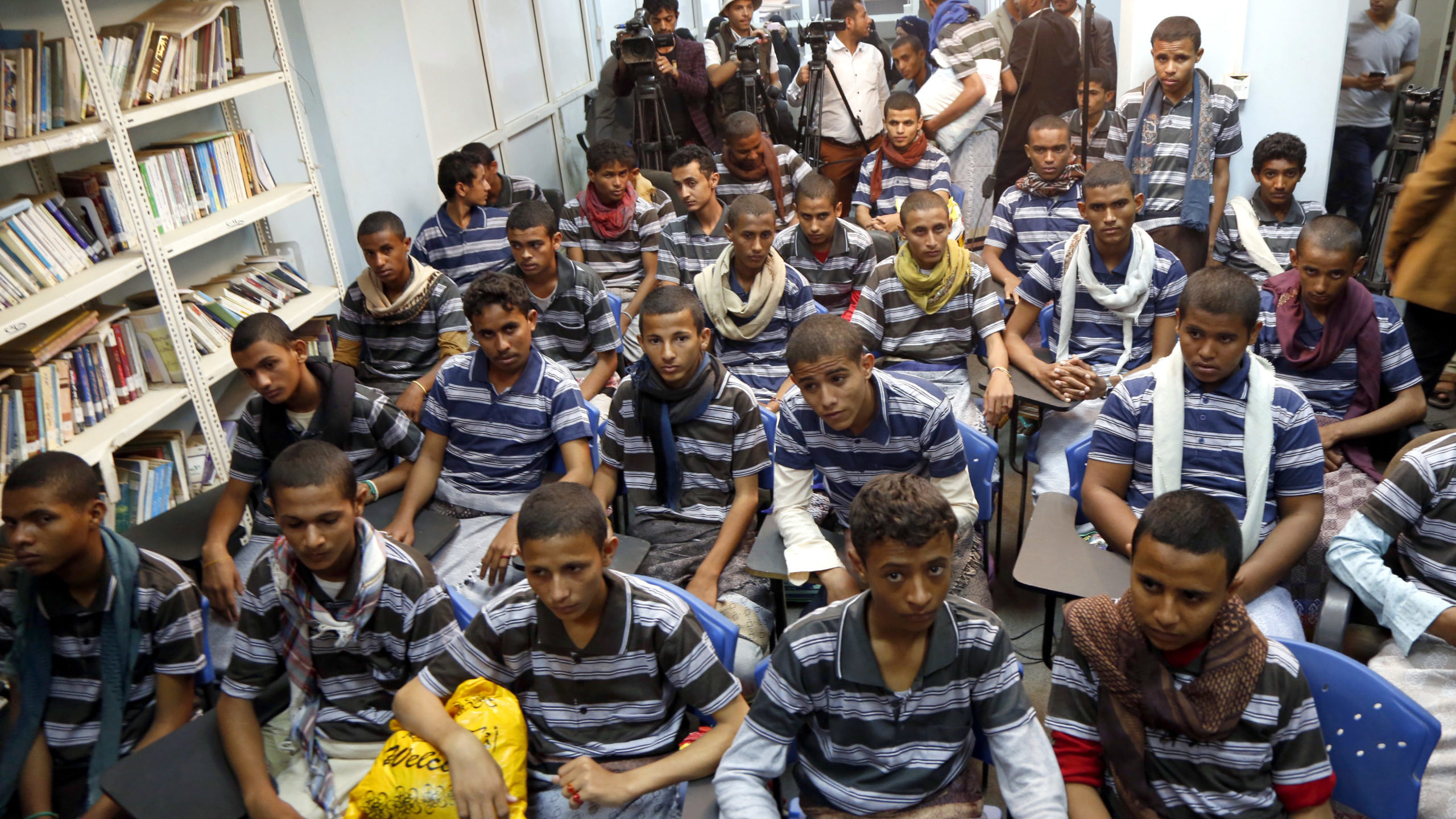
Yemeni Government, Houthis, Trade Blame as Prisoner Exchange Deadline Passes Without Action
A dispute between Yemen’s internationally recognized government and the Houthis over responsibility for delays in a planned prisoner exchange has stalled implementation of a deal signed in Muscat on December 23, 2025, with each side accusing the other of failing to provide the required detainee lists, Xinhua reports.
The first phase of the agreement was scheduled to begin on January 27, 2026, but it passed without any exchanges, raising questions about the parties’ readiness to implement the terms reached during UN-facilitated talks in Oman.
Abdulmalik Al-Mekhlafi, an adviser to Yemen’s presidency, accused the Houthis of obstructing the process. “The Houthi militia does not view agreements as a moral or humanitarian obligation, but as a means of political blackmail,” Al-Mekhlafi said, describing what he called a pattern of breaches and apparent indifference toward detainees and their relatives. He added that the failure to implement the Muscat agreement showed “contempt for international law and humanitarian considerations.”
Give the gift of hope
We practice what we preach:
accurate, fearless journalism. But we can't do it alone.
- On the ground in Gaza, Syria, Israel, Egypt, Pakistan, and more
- Our program trained more than 100 journalists
- Calling out fake news and reporting real facts
- On the ground in Gaza, Syria, Israel, Egypt, Pakistan, and more
- Our program trained more than 100 journalists
- Calling out fake news and reporting real facts
Join us.
Support The Media Line. Save democracy.
The Houthis rejected the accusation. Abdulqader Al-Murtada, head of the group’s prisoner affairs committee, said Houthi representatives had submitted their lists ahead of the most recent Muscat talks. “The delay in exchanging the lists is not on our side,” Al-Murtada said, arguing that the other party had not provided its lists within the agreed timeframe.
The deal calls for the release of nearly 3,000 detainees. Under the terms, 1,700 Houthi detainees are to be freed in exchange for 1,200 detainees affiliated with the government, as well as seven Saudis and 23 Sudanese nationals held by the Houthis.
The American Center for Justice later warned that continued delays risk worsening the conditions of thousands of detainees and their families. The organization said the failure to move forward undermines the agreement’s humanitarian purpose and called for greater transparency from the office of the UN Secretary-General’s special envoy for Yemen on the reasons behind the impasse.
Yemen’s conflict began in late 2014 when the Houthis seized Sanaa, leading to a Saudi-led intervention the following year. A UN-mediated truce in 2022 expired after six months, though a de facto ceasefire has largely held. The last major detainee swap took place in 2023, when about 900 detainees were released.
