Inside the IDF’s Seized-Weapons Exhibit: What Hamas and Hezbollah Left Behind
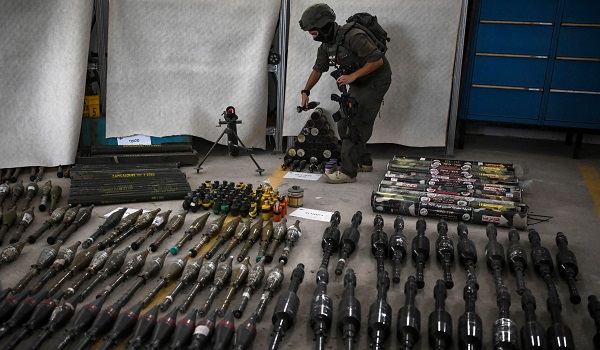
At an Israel Defense Forces exhibition at the Tzrifin base, reporter Gabriel Colodro takes viewers and readers inside a display of weapons seized from Hamas in Gaza and Hezbollah along Israel’s northern border—an inventory meant to show how October 7 translated into months of fighting.
The exhibit is run by the IDF team responsible for confiscating enemy materiel, a unit operating continuously since 1973. Its deputy commander, Lt. Col. (res.) Idan Sharon-Kettler, says the collection grew out of demand from commanders and visiting officials who wanted to see, in one place, what troops were encountering. With help from the IDF spokesperson’s unit, the briefings became a structured tour combining representative items recovered in Gaza, Lebanon, and other arenas.
Give the gift of hope
We practice what we preach:
accurate, fearless journalism. But we can't do it alone.
- On the ground in Gaza, Syria, Israel, Egypt, Pakistan, and more
- Our program trained more than 100 journalists
- Calling out fake news and reporting real facts
- On the ground in Gaza, Syria, Israel, Egypt, Pakistan, and more
- Our program trained more than 100 journalists
- Calling out fake news and reporting real facts
Join us.
Support The Media Line. Save democracy.
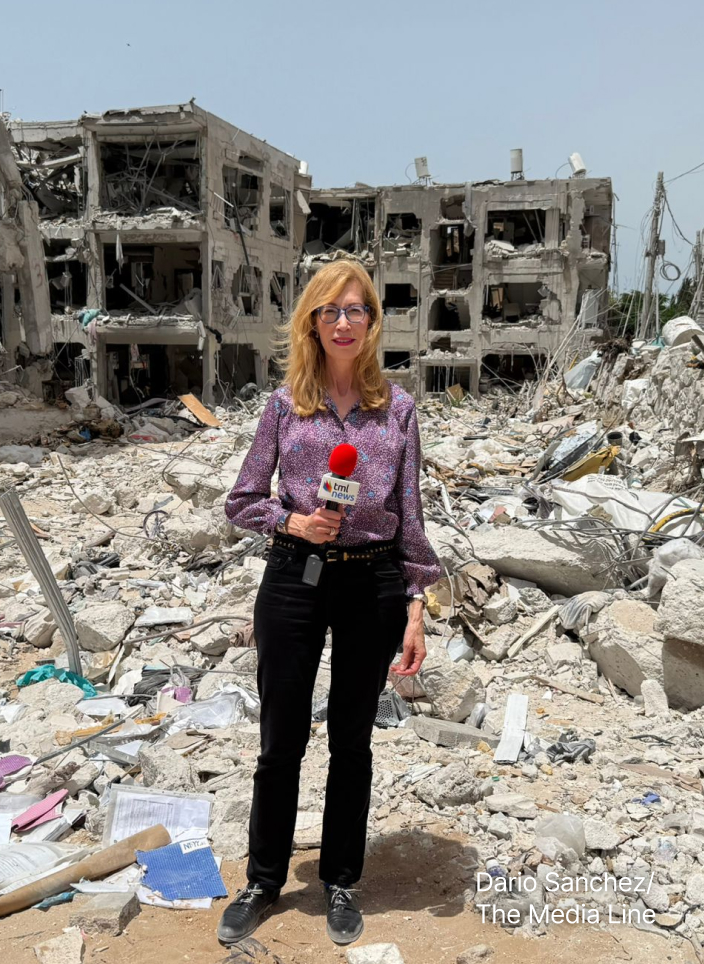
The first section focuses on Hamas weapons taken inside Israel after October 7 and later found again in Gaza, reinforcing that the assault relied on prepared military capability. Sharon-Kettler says the shock was the purpose behind the gear, not the engineering: “What surprised me was the murderous intention of massacring civilians using military equipment,” he said.
Rows of Kalashnikov-pattern rifles suggest wide black-market sourcing—Russian, Ukrainian, Chinese, North Korean, and Eastern European—while a handful of higher-end Russian variants were carried by senior gunmen. In the Hezbollah wing, the tone shifts to a more standardized arsenal: Iranian-marked SPG-9 recoilless cannons, Kornet anti-tank missiles captured from firing positions, and modified rocket launchers built for rapid salvos, plus medical kits.
The exhibit, Sharon-Kettler says, is a snapshot of continuing seizures, not a museum. Read the piece and watch the video report for the full tour—then decide what the weapons show about the supply chains behind them. Colodro’s reporting makes the case with steel and serial numbers.
