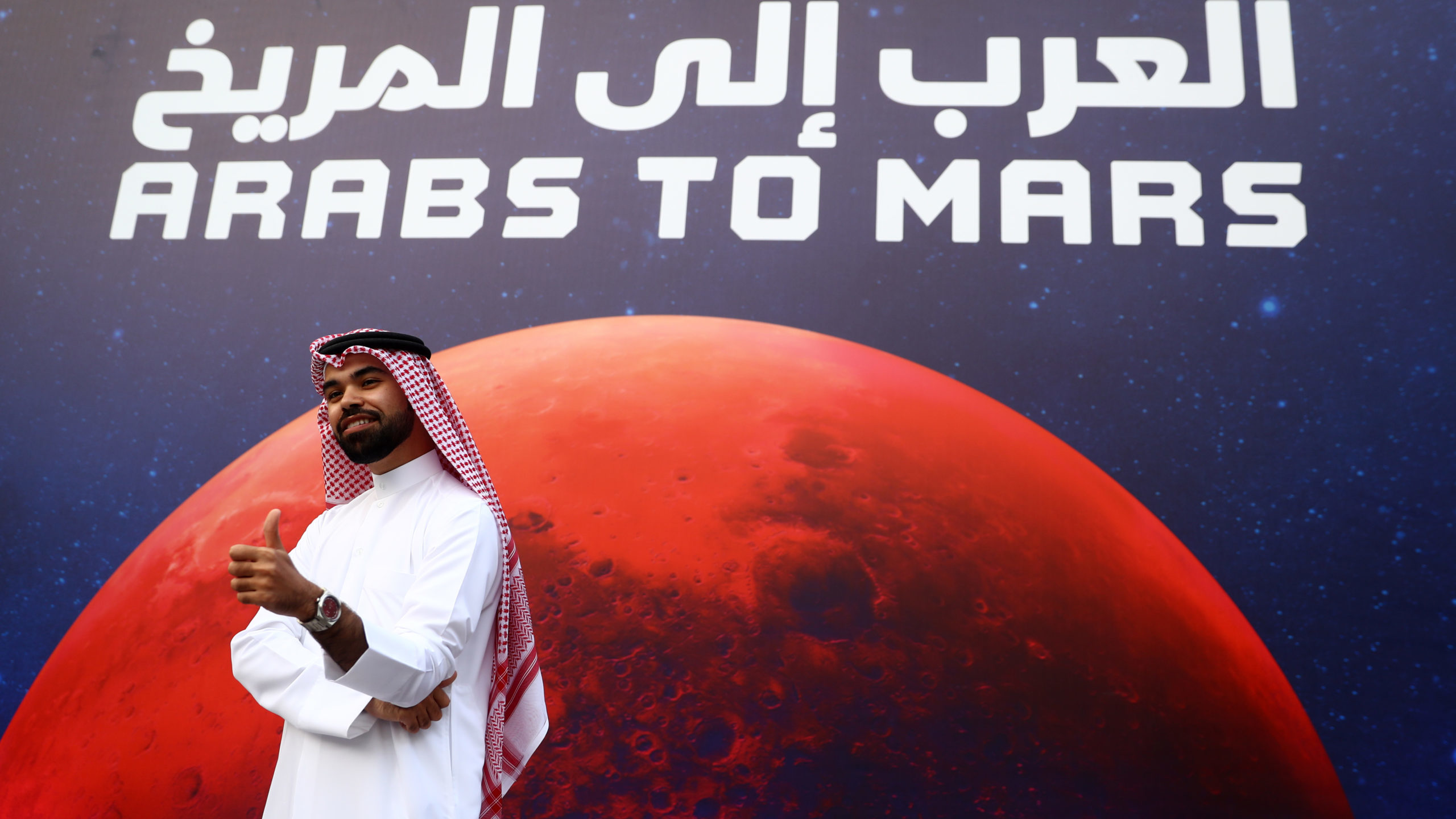
UAE Extends Hope Probe’s Mars Mission Through 2028
The United Arab Emirates’ Space Agency said Tuesday that it will keep the Hope Probe circling Mars until 2028, extending the Emirates Mars Mission to squeeze more science—and more know-how—out of the country’s flagship deep-space investment. The move, reported by the local daily Al Etihad, signals that the spacecraft remains healthy enough to keep working years beyond its original timeline, and that Emirati engineers want to parlay operational experience into future missions.
Hope was designed as a two-year mission after reaching Mars orbit in 2021, following a July 2020 launch that made the UAE the first Arab country to send a spacecraft to the Red Planet. The probe’s core job has been to study Mars’ atmosphere and weather patterns on a global scale, helping scientists understand how the planet’s climate works and how its atmosphere has changed over time.
Give the gift of hope
We practice what we preach:
accurate, fearless journalism. But we can't do it alone.
- On the ground in Gaza, Syria, Israel, Egypt, Pakistan, and more
- Our program trained more than 100 journalists
- Calling out fake news and reporting real facts
- On the ground in Gaza, Syria, Israel, Egypt, Pakistan, and more
- Our program trained more than 100 journalists
- Calling out fake news and reporting real facts
Join us.
Support The Media Line. Save democracy.


Since arriving, the spacecraft has collected about 10 terabytes of information and released 16 datasets to more than 200 research institutions worldwide, according to the agency. The mission has also contributed to fresh observations of auroral activity on Mars and executed close flybys of Deimos, the smaller and more distant of the planet’s two moons, offering new looks at an object that remains poorly understood.
The spacecraft’s science portfolio widened in October 2025, when Hope captured images of Comet 3I/ATLAS—described by officials as the third known interstellar object observed passing through the solar system—adding a headline-grabbing target far beyond the mission’s original Mars-focused agenda.
Officials said the extension reflects confidence in the probe’s technical readiness and in the national team that operates it, while also feeding the UAE’s fast-growing space sector through additional research partnerships and education efforts. The decision also fits a broader national strategy that has used high-profile space projects to build domestic aerospace capability, attract talent, and expand scientific output.
