
Israeli Preparations for a New War Against Lebanon
An-Nahar, Lebanon, August 30
According to speeches and official statements from Hezbollah and its Iranian patrons, the movement has no intention of surrendering its weapons; instead, it is preparing to escalate street demonstrations in an attempt to pressure the government into retreat—or even to topple it altogether. Neither outcome, however, is easily within reach. The pressing question becomes: what happens if Hezbollah refuses to disarm and instead organizes widespread mobilization in the streets?
The American delegation’s message to Lebanon was unambiguous: without disarmament, the country gains nothing, and no assurances exist that Israel will refrain from reigniting the war should the Lebanese army fail to enforce the government’s mandate on illegal weapons. The Israeli prime minister, for his part, publicly accepted the document ratified by the Lebanese cabinet, particularly the step-by-step framework beginning with Hezbollah turning its weapons over to the Lebanese military. Yet Israel’s recent conduct in Gaza emphasizes the fragility of such an offer—its shelf life is limited, and once spurned, the government in Tel Aviv tends to heighten demands and escalate militarily.
Israel has already mobilized 60,000 reservists and delayed the release of another 20,000 troops from combat brigades, officially under the justification of preparing for an occupation of Gaza City. All this unfolds while negotiations with Hamas continue in pursuit of a war-ending agreement that would also free hostages. Military leaders, however, strongly oppose the idea of occupying Gaza City, warning it would not secure the release of living hostages and might instead place them in mortal danger. Moreover, the scale of the mobilization—several divisions—appears excessive for the stated objective, especially as Israel already commands large portions of the Strip and Hamas’ operational capacity is gravely weakened.
Give the gift of hope
We practice what we preach:
accurate, fearless journalism. But we can't do it alone.
- On the ground in Gaza, Syria, Israel, Egypt, Pakistan, and more
- Our program trained more than 100 journalists
- Calling out fake news and reporting real facts
- On the ground in Gaza, Syria, Israel, Egypt, Pakistan, and more
- Our program trained more than 100 journalists
- Calling out fake news and reporting real facts
Join us.
Support The Media Line. Save democracy.
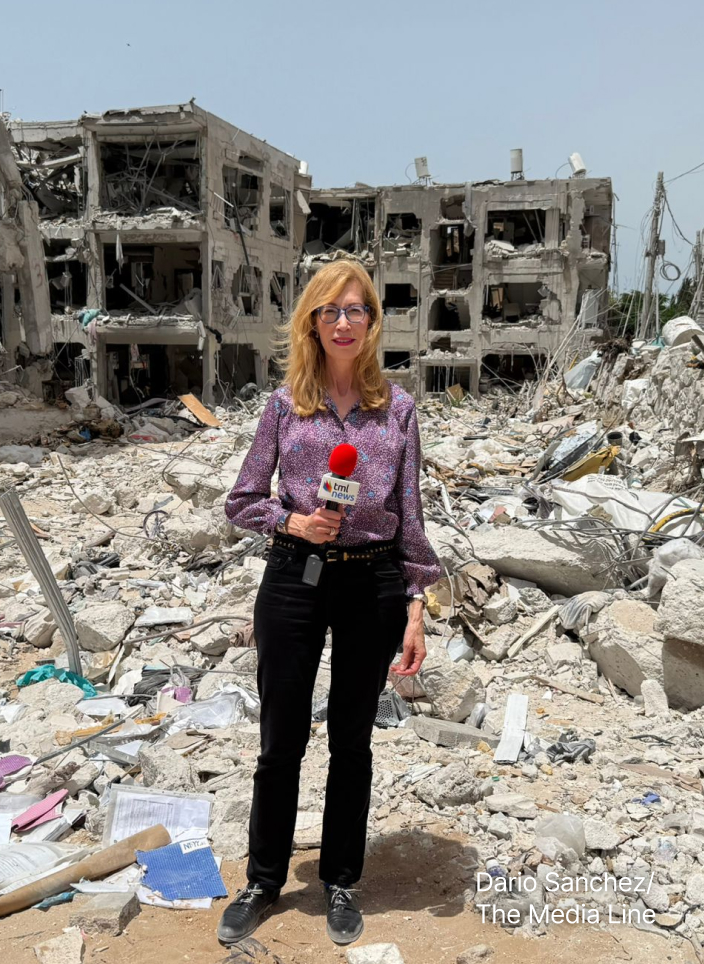
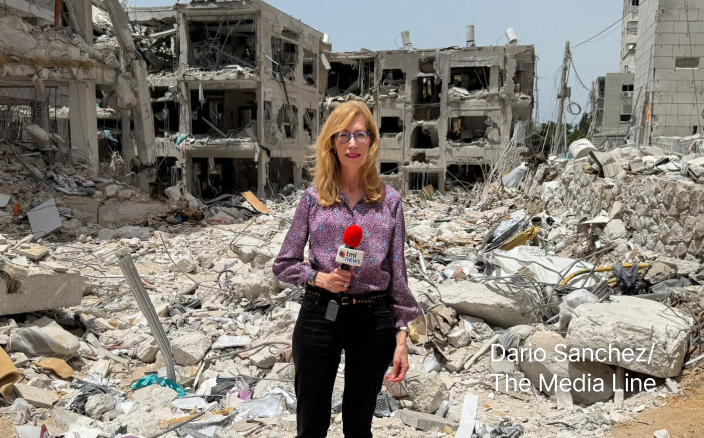
The current state of mobilization in Gaza during ceasefire talks bears an unsettling resemblance to the days leading up to the Lebanon war last September, when Israel launched its offensive mere days after a truce was signed. Villages were razed, ground invasions commenced, and the pattern suggests that if Tel Aviv chooses, it could pivot almost instantly from a Gaza deal to a new confrontation with Lebanon. Roughly three Israeli divisions are now stationed along the northern border, within Lebanese territory, in southern Syria, and around Mount Hermon—formations capable of launching swift strikes into southern Lebanon, the Bekaa Valley, or both. Israel is expected to reprise its brutal scorched-earth tactics combined with cautious advances designed to minimize its own casualties.
The clear objectives will be to destroy Hezbollah’s remaining heavy weapons and eliminate its emerging leadership. Should Israel open another front and seize more Lebanese territory, the conditions for withdrawal will grow harsher, leaving even more villages permanently depopulated. The international community, already skeptical, may impose punishing requirements on Lebanon before offering aid, doubting the state’s ability to govern effectively. Hezbollah’s arsenal is unlikely to halt a determined Israeli incursion, but this time the group may resist any ceasefire and instead hand that leverage to Tehran, allowing Iran to strengthen its bargaining position against both Israel and the United States.
In the end, only the Lebanese state, bolstered by Speaker Berri’s support, can bring a halt to Hezbollah’s—and by extension Iran’s—reckless gambits, sparing Lebanon from yet another cycle of devastation, displacement, and territorial loss.
Riad Kahwaji (translated by Asaf Zilberfarb)
