OPINION – Denmark, It’s Time for Your 2-State Solution
Applying self-determination rhetoric consistently would force European capitals to confront separatism and sovereignty inside their own borders
Since assuming its seat on the UN Security Council (2025–2026), Denmark has consistently championed the two-state solution, presenting it as “the only viable path to lasting peace.” While Copenhagen has not tabled a resolution recognizing Palestinian statehood, it has actively used its Security Council position to reinforce the two-state framework.
Danish diplomats at the United Nations argue that recognition of Palestine should not be contingent on Israel’s position, but instead on tangible progress toward peace and responsible statecraft. They emphasize governance reforms and institutional development as prerequisites for a democratic and viable Palestinian state. These are serious principles. They also raise an unavoidable question of credibility.
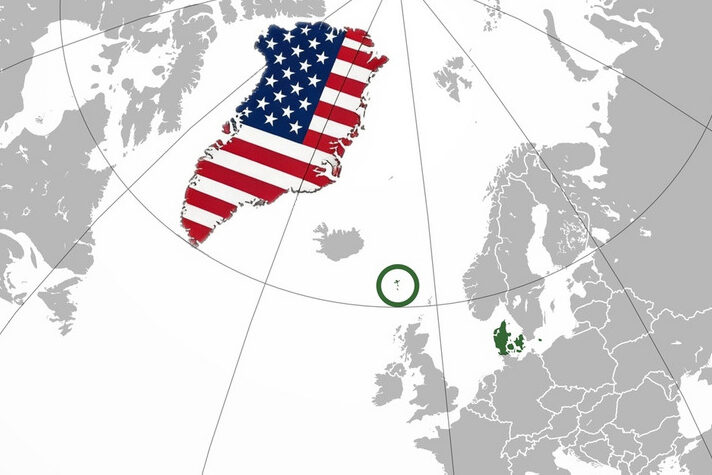
Denmark’s own recent history makes that question difficult to ignore. After Greenlanders exposed grave abuses under Danish rule, including forced sterilizations and the removal of children, Prime Minister Mette Frederiksen offered a brief apology: “We cannot change what has happened. But we can take responsibility. Therefore, on behalf of Denmark, I would like to say: I apologize.”
Apologies, though, are not policies. Denmark has now been handed an extraordinary historical opportunity—one enabled by President Trump—to move beyond rhetoric. The time has come not merely to advocate a two-state solution abroad, but to model it at home. History has placed Denmark in a position to demonstrate the altruistic love and moral leadership it so passionately demands of others at the United Nations. Denmark, it is time for your two-state solution. You have promoted it at the UN; surely, you will love it at home.
Nor is Denmark alone.
Give the gift of hope
We practice what we preach:
accurate, fearless journalism. But we can't do it alone.
- On the ground in Gaza, Syria, Israel, Egypt, Pakistan, and more
- Our program trained more than 100 journalists
- Calling out fake news and reporting real facts
- On the ground in Gaza, Syria, Israel, Egypt, Pakistan, and more
- Our program trained more than 100 journalists
- Calling out fake news and reporting real facts
Join us.
Support The Media Line. Save democracy.


Many countries enthusiastically prescribe two-state solutions for Israel while refusing to entertain similar principles domestically. Take the United Kingdom, for example. Welcome Scotland. No referendum required; simply apply London’s own demands toward Israel and declare: “Free, free, Aberdeen!” (Edinburgh, admittedly, does not rhyme as well.)
That model could even be upgraded to a three-state solution by adding Wales. The Welsh language deserves a global revival; perhaps this, too, could inspire the emergence of Lingua Palestinica.
Spain recognized the State of Palestine in 2024 and has aggressively promoted this position on the international stage. Prime Minister Pedro Sánchez has accused Israel of genocide, alleging attacks on hospitals and the deliberate starvation of civilians. Yet it was the Spanish government that imprisoned Catalan leaders following the 2017 independence referendum. Yes, a referendum—not a violent uprising, not an armed insurgency, not acts of terror. If Spain truly believes in self-determination, perhaps it is time to reconsider the fate of:
Oriol Junqueras, former vice president of Catalonia; Jordi Sànchez, former leader of the Catalan National Assembly; Jordi Cuixart; Raül Romeva; Dolors Bassa; Joaquim Forn; Carme Forcadell.
Each served a long prison sentence and now carries a criminal record. From the ocean to the sea—perhaps Catalonia, too, deserves to be free?
Belgium, in September 2025, announced its intention to formally recognize the State of Palestine at the UN General Assembly while imposing sanctions on Israel over the Gaza conflict. Belgium has been consistent, domestically and internationally, in demanding a two-state solution.
So why not begin at home? Let the Dutch-speaking state of Flanders recognize the French-speaking Wallonia. You already operate with separate political parties, media ecosystems, and education systems. Why not fully embrace your ideals and upgrade to peaceful Flanders living side by side with happy Wallonia? Who knows—perhaps the legends of ancient Wallonia might even inspire new histories of famous kings of Palestine.
Time does not permit an examination of the “spotless human-rights records” of the 159 countries that proudly support the two-state solution. But let us be clear: If this model is truly universal, leadership must begin at home—it’s time for your two-state solution.
